1
An Educational Map for Micronesia

2
Who Are These Strange People?
3
Islanders? Lives on Paper
4
Yap and Palau: The Far Edge of Micronesia
5
Pondering Change at the Xavier Graduation
6
Don?t Believe Everything You Read about Jesuits
7
Making Sense of This and That
8
The Missing Micronesians

An Educational Map for Micronesia

Victor Levine, an education consultant with lots of experience in the Pacific and beyond, has done a study of the Chuuk education system and published a long article for the East-West Center entitled ?Education in Pacific Island States.? Victor and I are planning to collaborate on a new project aimed at developing a set of objective indicators that can be used to track improvements in the education system in that part of the northern Pacific that we still call Micronesia. The point of it all is to Read More


Who Are These Strange People?

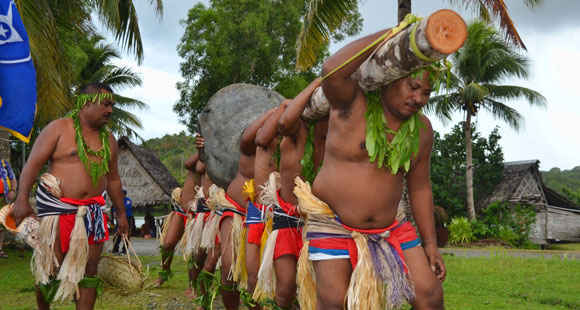
That?s the question that I found myself trying to answer last week in Hawaii. The ?strange people? were, of course, Micronesians who have moved to Hawaii over the past years. They include 8,000 FSM citizens, another 3,000 or 4,000 Marshallese and hundreds of Palauans.

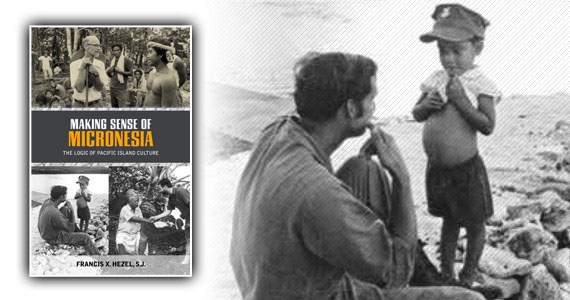
The East-West Center generously paid my way to Hawaii and set up a number of interviews, talks and radio and TV appearances during the week. Most of the events highlighted two recent publications of mine: Making Sense of Micronesia, the book published by University of Hawaii Press, and Micronesians on the Move: Eastward and Upward Bound, a monograph that EWC is releasing in a week or two. The first is on my struggle to understand island custom, and the other is on the migration of FSM people over the years. Read More

Yap and Palau: The Far Edge of Micronesia

This is a shortened version of a talk I gave at Yap Homecoming Day on June 15. The theme of the event was the link that binds Yap and Palau.

Yap and Palau, at the extreme western end of Micronesia, have always had an air of mystery around them–at least to us Westerners.

For one thing, their languages are so different from the rest of Micronesia–Palau the Polish of Oceania with all its consonants, and Yap with its closest relative being a Guatemalan language, a linguist friend tells me. Read More

Don?t Believe Everything You Read about Jesuits

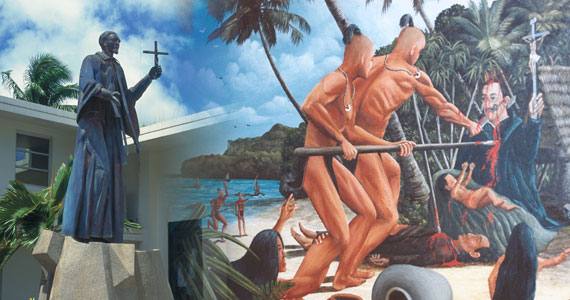
Fr. Diego Luis San Vitores, a Jesuit like the pope (and myself), has become something of a fascination here on Guam these days. His claim to fame is that he first brought the faith to the Marianas in the late 1600s. In fact, he was the first missionary to reach any of the Pacific islands. Nowadays little cards with a portrait of the man and a prayer for his canonization can be found everywhere on the island. There are relics on the altar that people venerate after mass, and even an old black habit that was said to have once belonged to him among the museum holdings. Read More

Making Sense of This and That

Pardon the self-promotion, but University of Hawai?i Press has just announced that my new book has just hit the streets. Don?t expect to see it on the New York Times best-seller list anytime soon. The title, Making Sense of Micronesia, is precisely what the book tries to do. As the blurb puts it:

Why are islanders so lavishly generous with food and material possessions but so guarded with information? Why do these people, unfailingly polite for the most part, laugh openly when others embarrass themselves? What does a smile mean to an islander? What might a sudden lapse into silence signify? These questions are common in encounters with an unfamiliar Pacific Island culture. Making Sense of Micronesia is intended for westerners who find themselves in contact with Micronesians?as teachers, social workers, health?care providers, or simply as friends?and are puzzled by their island ways. Read More

The Missing Micronesians

Last year at this time, a group of us had just begun our survey of the ?missing Micronesians,? as one of the MicSem videos put it: those people from FSM who had left their islands to find a home abroad. On this blog, some months ago, I posted a few paragraphs on the results of the survey. ?The full report of the survey is available through the FSM National Government, and within a few months the East-West Center should be publishing a monograph on the subject. Read More